Ever notice how the north side of a house looks greener and grimier than the rest? Same siding, same age, same owner. The difference is sunlight. Shaded walls stay damp longer, and algae, mildew and moss love a damp surface.
When it's time to clean that up, homeowners usually ask for "pressure washing." Sometimes that's exactly right. Other times, a different method called soft washing is the better and safer choice. Knowing which one fits each surface will save you from cracked siding, etched brick, or a roof that looks clean for a month before the streaks come back.
The Short Version
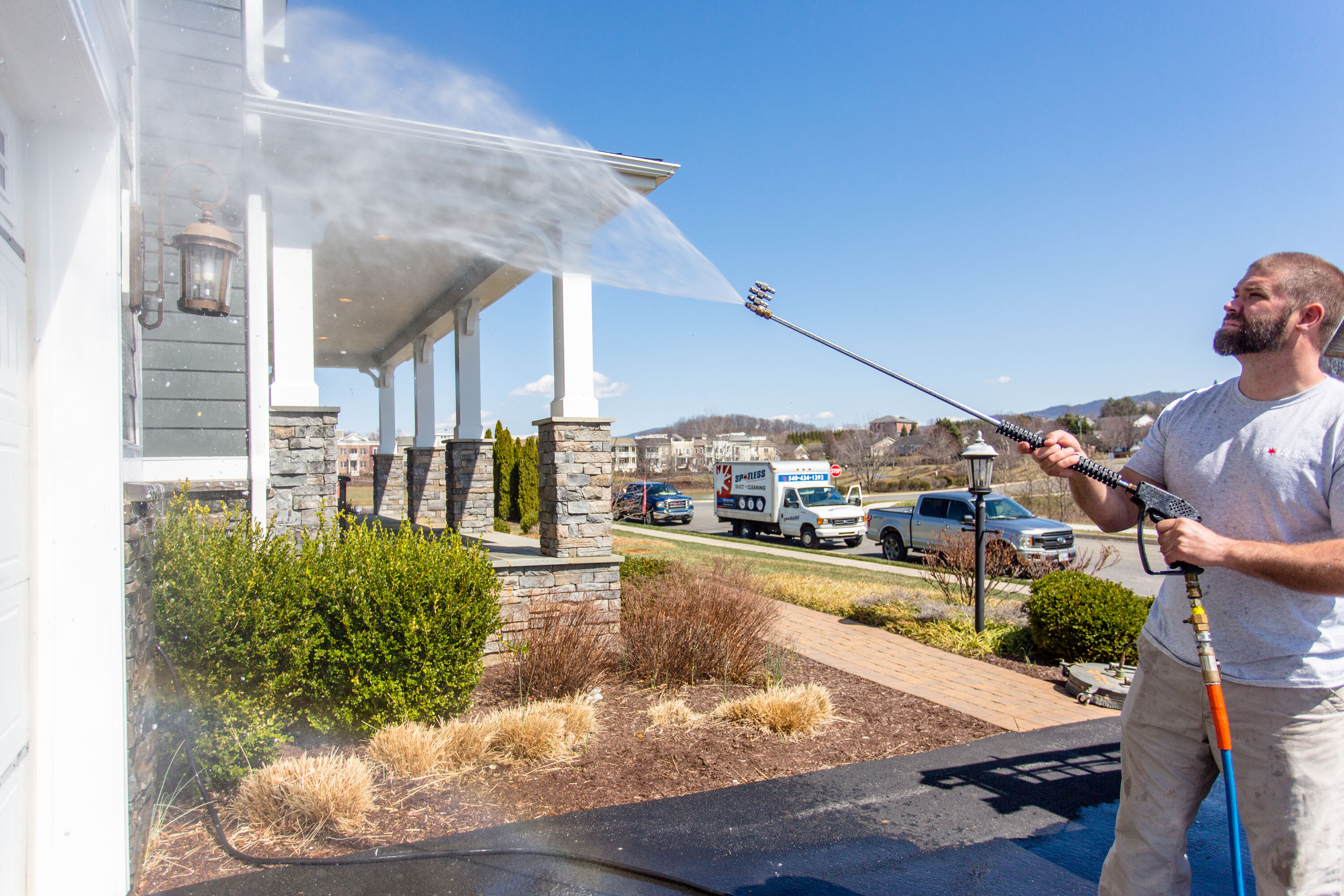
Pressure washing uses high-pressure water to blast dirt and grime off hard surfaces. It relies on force.
Soft washing uses low pressure, about what you'd get from a garden hose, combined with cleaning solutions that kill algae, mildew and mold at the root. It relies on chemistry.
Both get things clean. They just go about it differently, and each one has surfaces it's suited for.
Where Pressure Washing Shines
High pressure is the right tool for tough, dense surfaces that can take the force:
- Concrete driveways and sidewalks
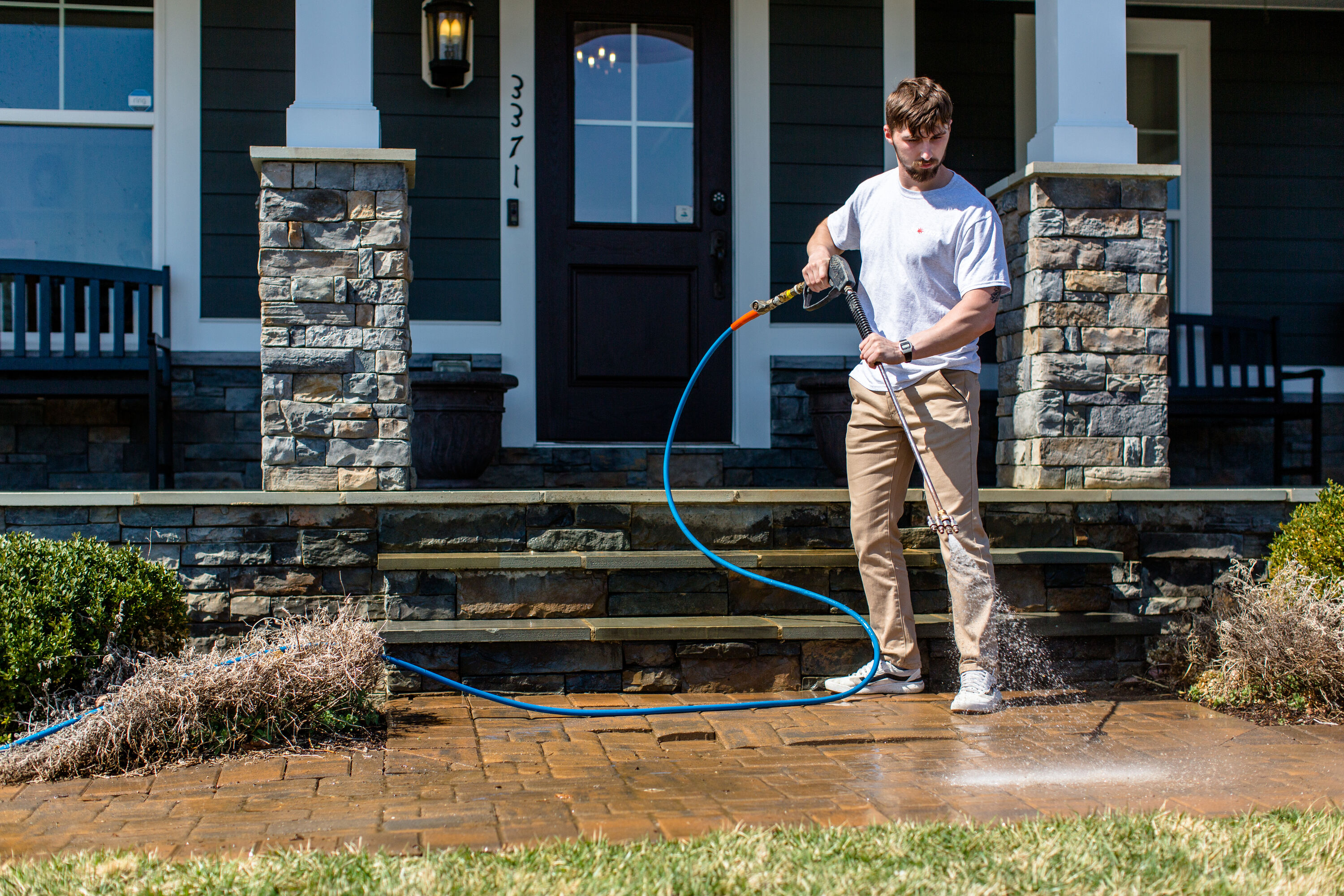
- Paver patios and stone walkways
- Garage floors with oil stains
- Commercial dumpster pads and loading areas
- Some decks and fences, with careful technique and lower settings
On these surfaces, pressure lifts embedded dirt, tire marks, and grime that chemicals alone can't touch. It's also fast, which matters on a big commercial lot.
Where Soft Washing Is the Smarter Choice
Some materials don't hold up to high pressure. Vinyl siding can crack or get water forced behind it, where it causes hidden moisture problems. Older mortar can wash out of brick joints. Painted surfaces can peel. Window seals can fail.
Roofs are the biggest example. Those black streaks you see on asphalt shingles across the Shenandoah Valley are usually a type of algae called Gloeocapsa magma. Blasting a roof with high pressure strips away the protective granules on the shingles and shortens their life. Soft washing kills the algae without damaging the shingle, and because it treats the growth at the root, results tend to last longer.
Soft washing is typically the go-to for:
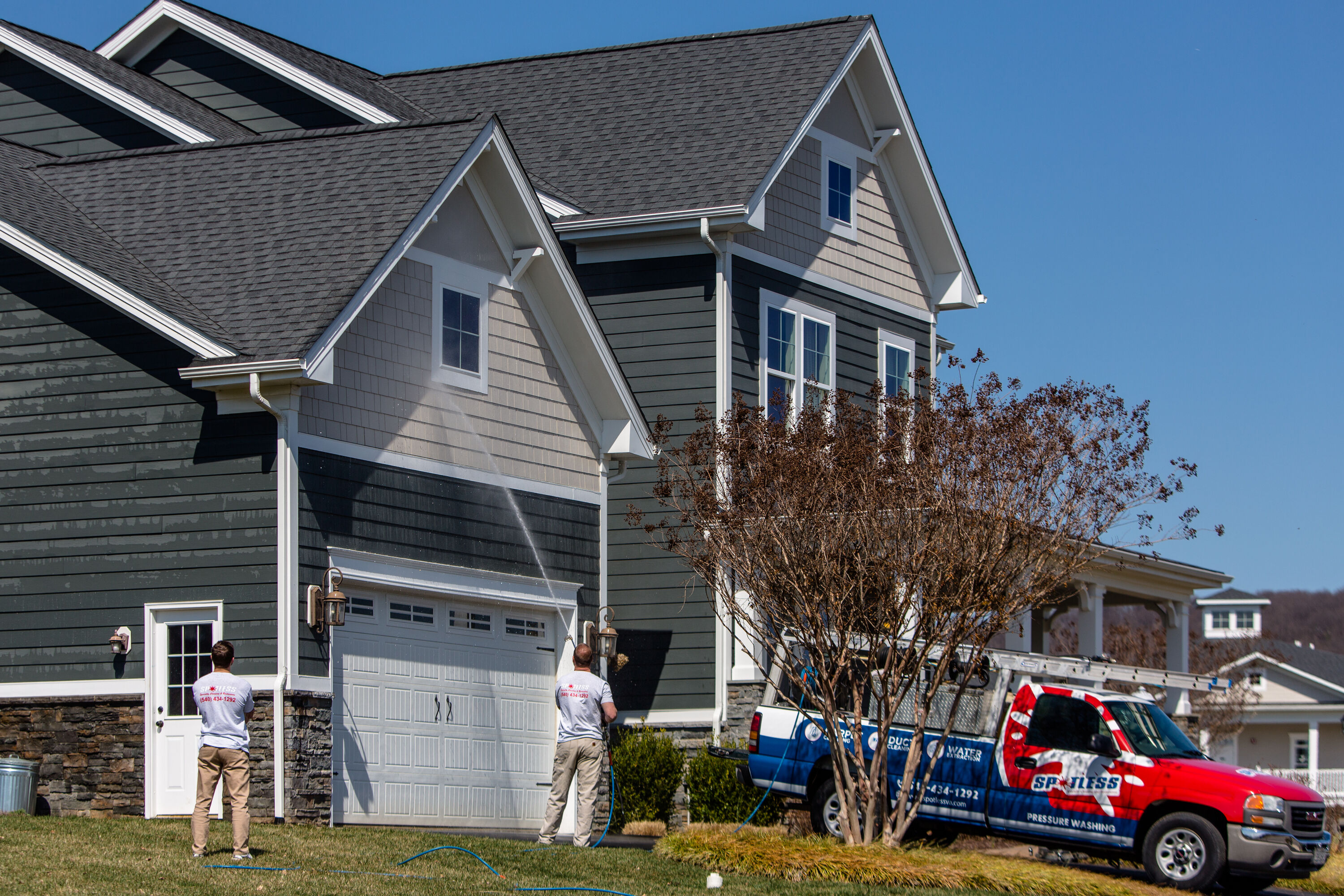
- Vinyl, aluminum and painted wood siding
- Asphalt shingle roofs
- Stucco and EIFS
- Older brick and stone with fragile mortar
- Screened porches and outdoor furniture
Why "Just Use Less Pressure" Isn't Quite the Same
You might wonder whether you can turn the pressure washer down and call it soft washing. Not really. Lower pressure on its own won't kill the algae and mildew spores living in the pores of your siding. The surface looks clean, but the growth comes back within months. The cleaning solution is what makes soft washing work.
Think of it like cleaning a kitchen counter. You can wipe off what you see with a wet cloth, but if you want to kill what's living on the surface, you need a cleaner that does more than move dirt around. Soft washing applies the same idea to the outside of your house. The solution sits on the surface long enough to break down organic growth, then gets rinsed away gently. Black streaks, green film and gray mildew spots fade without anyone having to blast the surface.
Application matters too. Plants and landscaping near the house need to be protected, and the solution has to be mixed and rinsed properly for each surface. That's where an experienced crew makes the difference.
Decks and Fences: The In-Between Surfaces
Wood is where the line between soft washing and pressure washing gets blurry. A weathered gray deck often needs some pressure to lift the dead, oxidized fibers off the surface and get back to fresh wood. Too much pressure, though, and the wand leaves furry, raised grain and visible stripes that show through any stain you put on afterward.
The usual approach is a cleaning solution to loosen mildew and grime, followed by a careful rinse at a lower pressure with a wide fan tip, always working with the grain. Softer woods like pine and cedar need a lighter touch than pressure-treated lumber. Composite decking has its own rules, and many manufacturers specify maximum pressures in their care guides.
If you're planning to stain or seal a deck, cleaning comes first. Stain sticks to clean, dry wood. Applied over mildew and dirt, it peels within a season. Give the wood a couple of dry, sunny days after cleaning before you seal it.
Getting Your Home Ready for Wash Day
A little preparation helps the job go quickly and protects your property:
- Close all windows and doors tightly, and check that window screens are latched.
- Move patio furniture, grills, planters and doormats away from the walls.
- Let the crew know about any outdoor outlets, light fixtures, or areas where water has gotten in before.
- Point out delicate plants or gardens near the foundation so they can be wetted down and protected.
- Park cars away from the house and driveway if the driveway is being cleaned.
- Keep pets indoors until everything has been rinsed.
If you've noticed loose siding, cracked trim, or peeling paint, mention it up front. Those areas need extra care, and sometimes a repair should happen before washing.
What's Actually in a Soft Wash Solution?
People are often curious, and sometimes a little nervous, about the "chemistry" part. Most soft wash solutions are built around a diluted form of sodium hypochlorite, the same active ingredient found in household bleach, mixed with a surfactant. The surfactant works like dish soap: it helps the solution cling to vertical surfaces and break through the slimy film algae produce, so it has time to work instead of running straight to the ground.
Concentration is the key. A solution that's strong enough to kill algae on a north-facing wall is far weaker than what you'd use to whiten laundry, and the mix gets adjusted for the surface and how heavy the growth is. Too weak, and the streaks come back fast. Too strong, and you risk spotting nearby plants or fading some finishes. That balance is where experience shows.
Protecting Your Plants and Landscaping
A careful soft wash should leave your flower beds looking exactly as they did before. The usual routine is simple but important: soak plants and grass near the foundation with plain water before the solution goes on, so their leaves and roots are already saturated. Rinse them again during and after the wash. Delicate shrubs and vegetable gardens can be covered with breathable tarps for the short time the solution is on the wall.
Timing helps, too. Washing on a cooler, overcast day keeps the solution from drying too quickly on the siding and reduces stress on plants. In the Valley, that often means a spring or early fall morning rather than a 90-degree afternoon in July.
A Typical Harrisonburg Home Uses Both
For most houses, the answer isn't one method or the other. It's both. A full exterior cleaning might look like this: soft wash the siding and roof, pressure wash the driveway and front walk, and use a gentler pressure on the deck before it's sealed.
At Spotless Specialty Cleaning & Restoration, our house washing, patio and deck cleaning, and pressure washing services around Harrisonburg and Rockingham County all start from the same idea: match the method to the material instead of treating every surface the same.
Spring and early fall are ideal times to schedule, after pollen season and before leaves start falling. Not sure how often your home needs it? Our guide on how often to schedule house washing breaks it down. If your siding is looking green or your deck has gone gray, call us at 540-434-1292 and we'll recommend the right clean for every surface.