It's 6:40 on a Saturday morning. You go downstairs for coffee and step into an inch of cold water. The water heater has split along the bottom seam, and it's been leaking all night. The carpet squelches. Boxes stacked against the wall are dark halfway up. Somewhere in your head a voice is saying, what do I do first?
Most people who search for "water damage restoration near me" are standing in some version of that scene. They're stressed, they're short on time, and the decisions they make over the next two days will decide whether this is an annoying weekend or a months-long repair.
This guide walks through those first 48 hours, step by step.
Hour 0 to 1: Stop the Water and Stay Safe
Before anything else, cut off the source. For a burst pipe or failed appliance, that means the main water shutoff, which in many Harrisonburg homes is in the basement near where the water line enters the foundation. For a water heater, close the cold-water supply valve on top of the tank and turn off the gas or the breaker.
Then think about electricity. If water is near outlets, power strips, or anything plugged in, don't wade through it. Shut off power to the affected area at the breaker panel if you can reach it safely. If you can't, wait for help.
If the water came from outside, such as a flooded creek or surface runoff after a heavy storm, treat it as contaminated. The same goes for a sewage backup. Keep kids and pets away and avoid skin contact.
Hour 1 to 2: Document Everything
Pull out your phone and take more photos and video than you think you need. Capture:
- The source of the leak
- The standing water, with something in the frame for scale
- Waterlines on walls, furniture and boxes
- Damaged items, including serial numbers on electronics and appliances
Do this before you move anything. Your insurance adjuster will want to see the damage as you found it, and these photos will make your claim much smoother.
Then call your insurance company to open a claim. Ask whether they have requirements about who performs water mitigation and what documentation they need. Write down the claim number and the name of the person you spoke with.
Hour 2 to 6: Get Professional Water Extraction Started
This is the step people are most tempted to put off, and it's the one that matters most.
According to the EPA, mold can begin to grow on damp materials within 24 to 48 hours. That clock started when the leak did, not when you found it. A wet-dry vac and a few box fans can handle a small spill on hard flooring, but they won't pull water out of carpet padding, subfloors, or the bottom few inches of drywall. Those are exactly the places where hidden moisture turns into mold, odor, and structural problems weeks later.
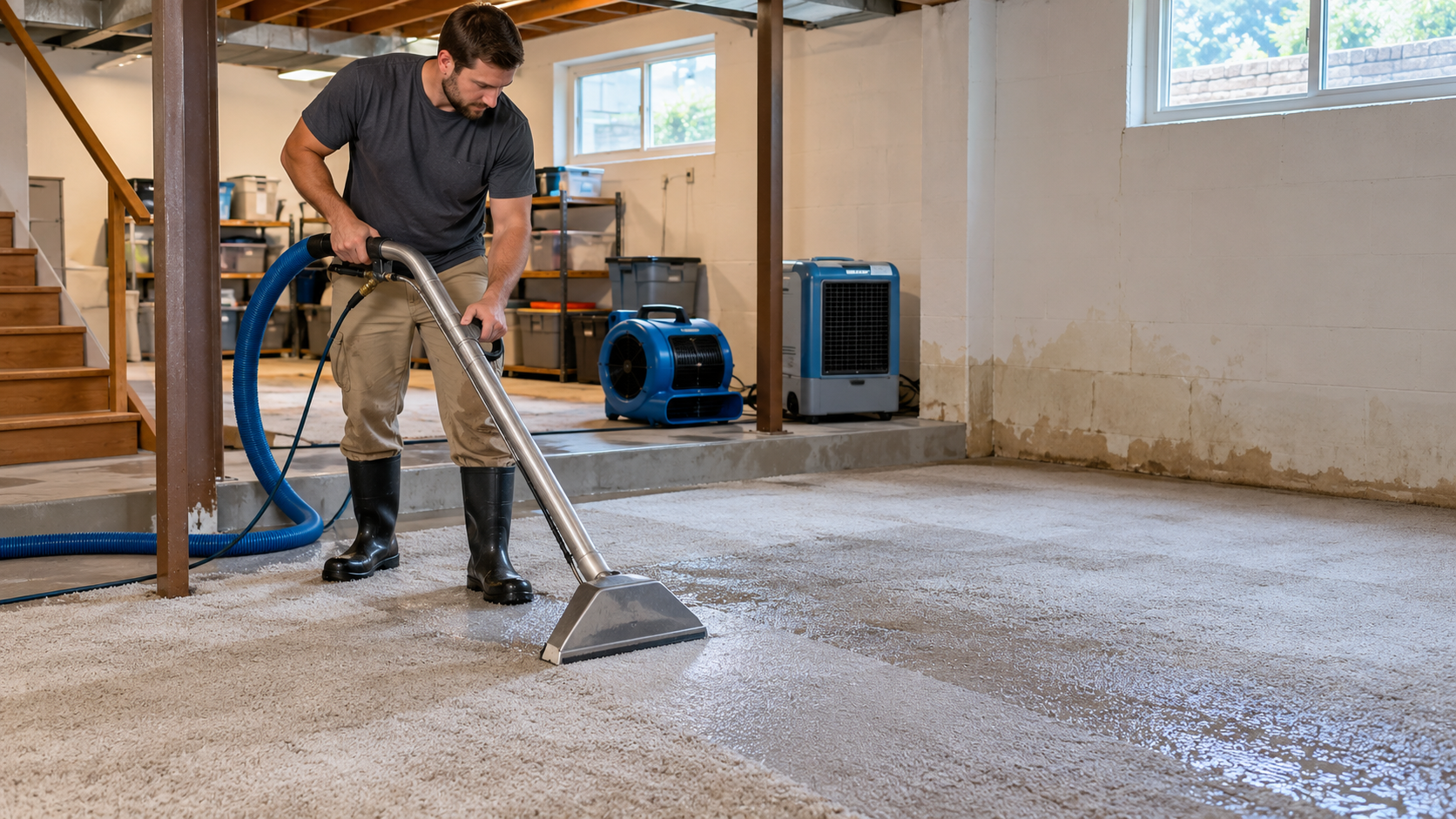
Professional emergency water extraction uses powerful pumps and extraction tools to remove standing water and draw moisture out of carpet and pad. Moisture meters show where water has wicked into walls and floors, even when the surface feels dry to the touch.
Spotless Specialty Cleaning & Restoration offers 24-hour emergency water extraction for exactly this reason. Water damage doesn't wait for business hours, and neither should the response.
Hour 6 to 24: Move What You Can and Open Things Up
While extraction is underway or right after, start triaging your belongings.
Move to dry ground: furniture, rugs, electronics, papers, photos, and anything that can be saved. Put aluminum foil or wood blocks under furniture legs that have to stay on damp carpet so the stain doesn't transfer.
Set aside for the adjuster: items that are clearly ruined. Don't throw them out yet unless your insurer says it's fine.
Open up the space: remove baseboards in badly soaked rooms if you're comfortable doing so, and open closet doors and cabinets so air can reach those spaces. If the weather is dry, open windows. If it's humid outside, which is common in the Valley in summer, keep the windows closed and let dehumidifiers do the work.
Wet paper and cardboard should come out quickly. Cardboard boxes stored on basement floors are one of the most common places mold shows up first.
Hour 24 to 48: Drying, Monitoring, and Decisions
Once the bulk water is gone, the job becomes structural drying. Air movers and dehumidifiers run continuously, and moisture readings are taken each day to track progress. This phase can take anywhere from three days to more than a week depending on how much water there was, what materials got wet, and how long it sat.
During this window you'll also need to make some decisions:
- Carpet and pad. Carpet soaked by clean water can often be dried and cleaned in place. Padding is cheaper to replace and holds moisture stubbornly, so it's frequently removed. Carpet exposed to contaminated water usually has to go.
- Drywall. If water wicked more than a foot or so up the wall, or if insulation behind it is saturated, a flood cut may be needed. That means cutting out the bottom section of drywall so the wall cavity can dry.
- Furniture. Solid wood often recovers. Particleboard and pressed wood swell and rarely come back.
Extraction vs. Remediation vs. Restoration
You'll hear these words a lot, and they mean different things.
Extraction removes the water. Remediation (or mitigation) deals with the damage the water causes: drying the structure, cleaning, disinfecting, and treating or removing anything with mold growth. Restoration is putting the home back together, which might include new drywall, flooring and paint.
When you call a company, ask which of these they handle. For a deeper look at the difference, see our post on water extraction vs. water remediation. Spotless focuses on extraction, drying and cleanup, including mold remediation and carpet and upholstery cleaning once things are dry.
Working With Your Insurance Adjuster
Insurance can feel like a second emergency on top of the first. A few habits make the process much smoother:
- Keep a simple log. Note every call, who you spoke with, and what they said. A notes app on your phone works fine.
- Save every receipt. Hotel stays, meals out, fans you bought, and any emergency repairs may be reimbursable depending on your policy.
- Ask what's covered before you tear anything out. Most policies cover sudden and accidental water damage, such as a burst pipe, but treat gradual leaks and outside flooding differently. Flood damage from surface water usually requires separate flood insurance.
- Request copies of drying records. Daily moisture readings show the adjuster that drying was done properly and that hidden damage was addressed.
You're also allowed to choose who does the work. Your insurer may recommend a company, but in most cases the decision is yours.
Three Mistakes That Make Water Damage Worse
Using a household vacuum. A regular vacuum isn't built for water and can short out or shock you. Only use a wet-dry vac rated for liquids, and only on clean water.
Turning the heat way up. It seems logical that heat would dry things faster. In a closed room, cranking the thermostat without dehumidification mostly raises the humidity, which is exactly what mold wants. Drying needs moving air and moisture removal, not just warmth.
Painting or patching too soon. Drywall and wood can feel dry on the surface while still holding moisture inside. Sealing them up with paint or new flooring traps that moisture. Wait until moisture readings confirm materials are back to normal levels.
What Affects the Cost of Water Damage Restoration
Every job is different, so it's hard to give a single number. These are the factors that drive the price of water damage restoration up or down:
- How much area got wet. A single room is a very different job from a whole finished basement.
- The type of water. Clean water from a supply line is the simplest. Gray water from a washing machine or dishwasher takes more cleaning, and black water from sewage or floodwater requires removing most porous materials it touched.
- How long it sat. Water that's been there for a few hours is far easier to deal with than water that sat over a long weekend.
- What materials are involved. Carpet over concrete dries differently from hardwood over a wooden subfloor.
- Whether mold has started. Once growth begins, remediation adds time and cost.
The single biggest lever you control is speed. Calling for extraction the same day almost always costs less than waiting until Monday.
How to Choose a Water Damage Company
When you're searching for water damage restoration near you in a hurry, it's easy to call the first number that comes up. A few quick questions will help you choose well:
- Are you local, and how fast can someone be here?
- Do you work with insurance companies, and will you provide moisture readings and photos for my claim?
- What equipment will you leave on site, and how often will you check it?
- Who do I call if I have questions after hours?
A local company has a real advantage here. Spotless is based at 116 Charles Street in Harrisonburg, which means a shorter drive to your door and a team that knows how older Valley homes with stone foundations and finished basements tend to take on water.
Need Help Right Now?
If you're dealing with water in your home today, call Spotless at 540-434-1292. We'll get extraction started, help you document the damage, and walk you through what comes next. The sooner the water is out, the more of your home you'll be able to save.