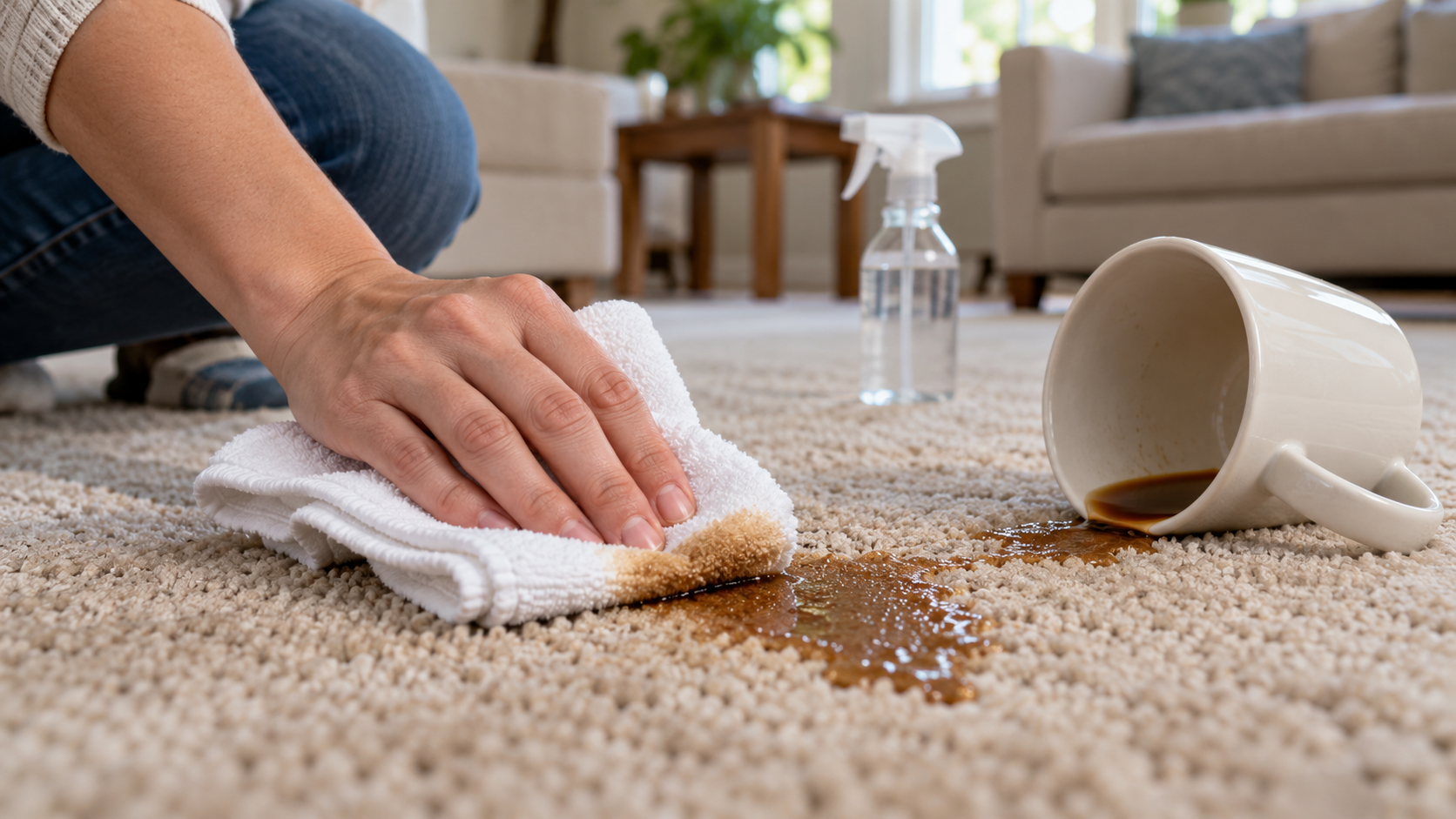
Here's the uncomfortable truth about carpet stains: the spill is rarely what ruins the carpet. What usually does it is the panicked five minutes that follow.
We see it all the time. A small coffee drip becomes a fuzzy, light-colored patch the size of a dinner plate. A spot that came out last week is back again. A red wine splash turns into a pink halo with a rough, matted center. In almost every case, the fix made it worse.
Here are seven common mistakes people make when removing stains from carpet, and what to do instead.
1. Scrubbing
It's instinct. Something spills, you grab a towel and scrub hard. Unfortunately, scrubbing pushes the stain deeper into the fibers and the padding, spreads it outward, and roughs up the carpet pile so it looks fuzzy and worn even after the color is gone.
Do this instead: Blot. Press a clean white cloth or paper towel onto the spill, lift, and repeat with a fresh section. Work from the outside edge toward the center so you don't spread it.
2. Using Too Much Product
More spot cleaner doesn't mean more cleaning. Most carpet spot removers contain detergents, and whatever you don't rinse out stays in the carpet. That soapy residue is sticky. It grabs dirt from every pair of socks that walks across it, and within a few weeks the spot is darker than the original stain.
Do this instead: Use a small amount, then blot with plain water afterward to rinse. Blot again with a dry towel until no more moisture transfers.
3. Reaching for Hot Water on Protein Stains
Blood, milk, egg, vomit and some pet accidents are protein-based. Hot water can set proteins, much like cooking an egg, which bonds the stain to the fiber.
Do this instead: Use cool water on anything that came from a person, a pet, or the fridge.
4. Mixing Cleaners
When the first product doesn't work, it's tempting to try a second and a third. Some combinations react with each other or with the carpet dye. Bleach-based products, in particular, can strip color permanently and should never be combined with ammonia or other cleaners.
Do this instead: Stick with one approach. If it doesn't work after a couple of tries, stop and call a professional. A stain that hasn't been heavily treated is much easier for us to remove than one that's been through four different products.
5. Skipping the Spot Test
Not all carpets react the same way. Wool, nylon, polyester and olefin each respond differently to cleaning solutions. A product that's safe on one can lighten or discolor another.
Do this instead: Test any cleaner in an out-of-the-way spot first, such as inside a closet or under a piece of furniture. Wait several minutes and blot with a white cloth to see if any color transfers.
6. Soaking the Spot
Pouring water or cleaner onto a stain lets it run down into the pad. Once it's there, it's hard to get out, and it often wicks back up to the surface as the carpet dries. This is why stains sometimes "reappear" a day or two after you thought they were gone. Excess moisture in the pad can also lead to odor.
Do this instead: Mist or dab, don't pour. Keep the moisture in the top of the fibers, and put a stack of dry towels on the spot with something heavy on top to pull up what's left.
7. Waiting Too Long to Get Help
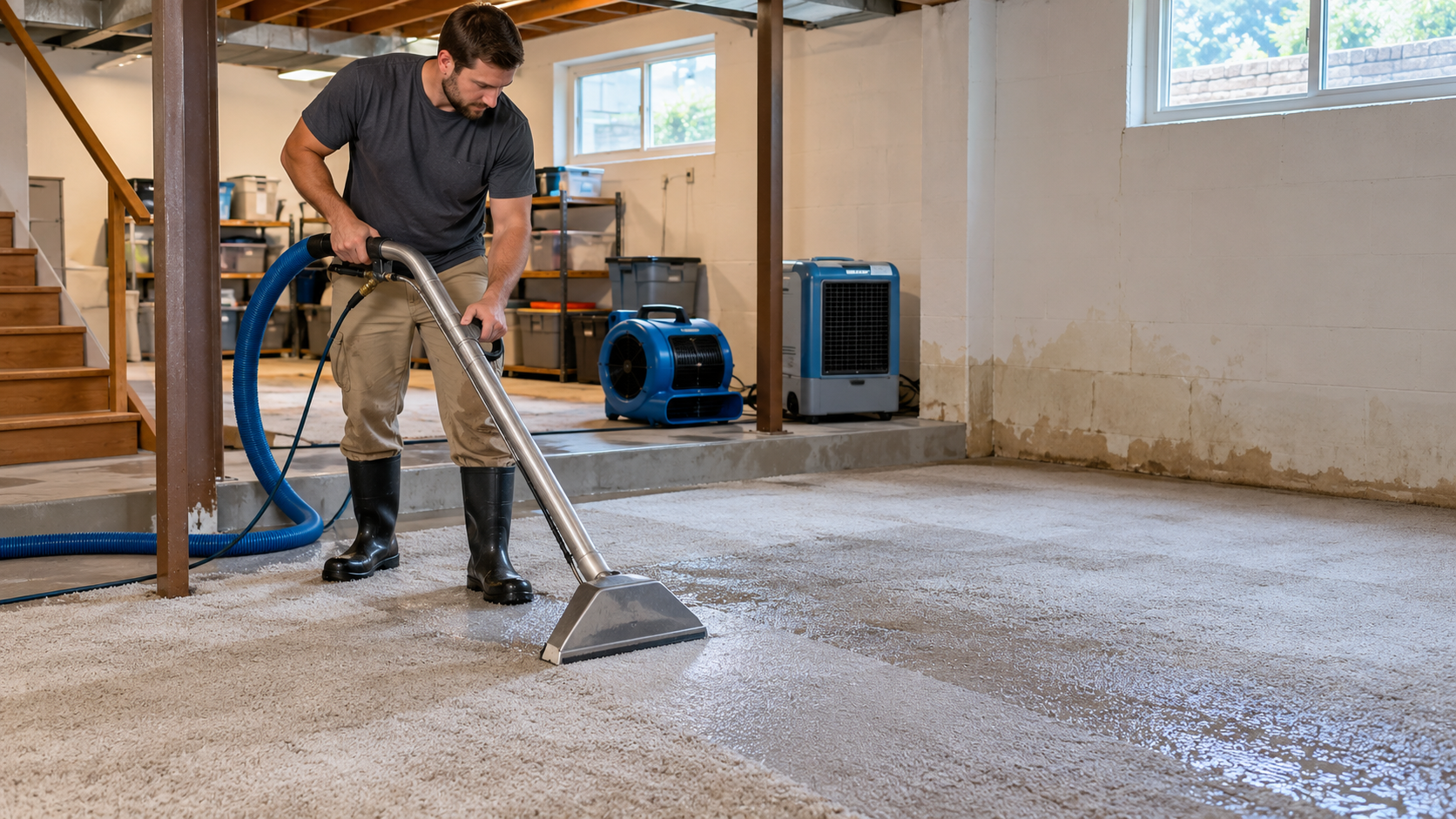
Some stains just aren't DIY jobs. Pet urine that has reached the pad, old set-in stains, dye stains from drinks or kids' markers, and anything left to sit for weeks usually need professional tools and treatments.
Do this instead: Treat what you can right away, and if a stain hasn't budged after a gentle try, leave it alone and have it looked at. Our post Carpet Cleaning vs. Replacement explains why even tired-looking carpet can often be saved. The less you've done to it, the better the odds.
Build a Simple Spill Kit
Most of the damage happens because people grab whatever is closest. Keeping a small kit in a hall closet means you'll reach for the right things instead. It doesn't need to be fancy:
- A stack of clean white cloths or plain white paper towels (colored ones can transfer dye)
- A spray bottle of plain cool water
- A small bottle of a carpet-safe spot cleaner you've already spot-tested
- A dull butter knife or spoon for lifting solids like food or mud
- A few old towels and something heavy, like a stack of books, for pressing out moisture
For dried mud, let it dry completely, then break it up and vacuum before treating any remaining mark. Trying to wipe wet mud just spreads it.
A Stain-by-Stain Cheat Sheet
Different spills need slightly different handling. Here's a quick reference for the stains we see most in Harrisonburg homes:
- Coffee: Blot right away with cool water. A drop of clear dish soap in a cup of water can help, followed by a plain water rinse.
- Red wine: Blot, don't pour. Dab with cool water and keep blotting with fresh sections of cloth. If a pink shadow remains, leave it for a professional rather than reaching for bleach.
- Grease and butter: Scrape up solids, then blot with a small amount of dish soap solution. Grease spreads with heat, so skip the hot water.
- Pet urine: Blot thoroughly, then use an enzyme cleaner made for pet stains. Enzymes break down the compounds that cause odor. Avoid ammonia-based products, which can smell like urine to pets and invite repeat accidents.
- Blood: Cold water only. Blot gently and keep it from spreading.
- Gum: Hold an ice cube in a plastic bag on the gum until it hardens, then lift it off with a dull edge.
- Nail polish, paint, and ink: These are tricky. Solvents can damage carpet backing or remove color, so it's usually safer to blot what you can and call for help.
Whatever the stain, test first, use as little product as possible, and rinse afterward.
Why Removing Stains From Carpet Gets Harder Over Time
Fresh spills sit mostly on the surface of the fibers. Given time, they soak deeper, react with air and light, and bond with the carpet dye. Coffee and tea contain tannins that darken as they oxidize. Sugary drinks leave a sticky film that attracts soil. Pet urine changes chemically as it dries and can leave yellow staining and odor that a simple spot cleaner can't reach.
That's why speed matters so much. Removing stains from carpet in the first few minutes is often easy. Removing the same stain a month later can be a real challenge, even for professionals.
When to Call Spotless
Spotless Specialty Cleaning & Restoration has been helping Harrisonburg homeowners with stubborn carpet stains since 2011. If you've got a spot that won't quit, or a whole room that needs a refresh, call us at 540-434-1292. And next time something spills, remember: blot, don't scrub.